Talking about failures & mistakes in construction projects early on is a must to do job.

Let's start with some common causes of failures and mistakes in construction projects:

1. Poor planning: It is well said that "Failure to plan is planning to fail". A lack of thorough planning can lead to a number of problems, including inadequate budgeting, unrealistic schedules, and unexpected issues that arise during construction.
2. Poor communication: Communication breakdowns between different parties involved in a construction project (e.g., contractors, designers, engineers, etc.) can lead to misunderstandings and mistakes.
3. Lack of quality control: If proper quality control measures are not in place, it can result in subpar workmanship and materials, leading to issues down the line.
4. Change orders: Changes to the scope of work during a construction project can lead to delays and cost overruns if they are not properly managed.
5. Unforeseen site conditions: Unexpected issues that arise during construction due to factors such as soil conditions, underground utilities, or other site-specific challenges can cause delays and increase costs.
6. Incompetent design of works: Lack of competent design of works during design phase leads to delay in the project schedule . As a result , it increases time and cost of the project.
7. Unreliable workers/subcontractors: A lack of qualified workers or a team that is unreliable is recipe for disaster when it comes to construction projects. it is especially important to vet your subcontractors, who can tarnish your reputation if they don't do their part or, even worse , don't pay their suppliers. Because the job relies so heavily on other people, it is important to know who you are working with and if they can be trusted to do a good job.
8. No Accountability : When project failures occur, there is a lot of finger pointing. Nothing brings morale down more than when people place blame on others. However, individuals must be held accountable for completing their tasks in a manner in accordance with time, quality, and cost expectations.
9. Forgetting small things: We are all naturally forgetful and have days where we can do something by mistake or drop something. However, when it becomes a culture at the workplace, it can be very detrimental to a project. There should be systems on proper equipment handling, continuous training, and monitoring to ensure we do not overlook small things on-site. Ignoring things like equipment management on a project has dire consequences such as unexpected costs. This is why there is a need to follow a strict maintenance schedule with equipment. This helps save a lot of time and money.
10. Coordination between Design and Execution: As mentioned before, the design phase represents the start of any project, and in this phase the designer puts all his ideas and every detail related to all disciplines of the project. As a result, in the execution phase the contractor should take into consideration all of the designer notes and special instructions to execute the project properly. However, most of the contractors do not review all the details mentioned in the design and this might lead to massive failures while executing the project, in fact some of the failures might not appear until the operation phase; which will lead to tremendous losses. Accordingly, to avoid such mistakes, the contractor’s technical office should thoroughly review the design to ensure that it can be really executed and that it does not contain any fatal mistakes.
11.Coordination between Work Disciplines:One of the most common obstacles in any construction project is the bad coordination between the work disciplines (Civil, Architectural, Mechanical, Electrical …etc). Multiple delays happen and a massive amount of rework because of this issue. The worst part is that the problems caused by bad coordination only get discovered in the execution phase when a step is scheduled to take place after another step from another discipline (i.e. Mechanical after Civil). It is at this time the site engineer finds out that the first activity’s drawings & calculations were not coordinated with the second one. However, this could be avoided by:
- Assigning skilled personnel with previous experience in related projects in the technical review team to make sure they have witnessed this kind of problems before and know how to avoid it.
- Producing a detailed and precise “Shop Drawings” to be revised by all teams to make sure that all disciplines are well coordinated.
- Review for the last time to be conducted by the site engineer right before the execution of the activity.
12. Neglecting basic safety measuresStaying up to date on basic safety protocols and requirements should inform agendas for those regularly scheduled trainings. The Occupational Safety and Health Administration (OSHA) keeps a current list of recommendations, requirements, and tips covering fall prevention, proper scaffold use, ladder safety, and more. Consider these required, not recommended reading. At best, you could be fined for failing to comply. At worst, you could be putting your workers in life-threatening situations.
Accidents will happen, but the more organized and prepared contractors and crews are, the better the chances of reducing such tragedies. Modern technologies have made it significantly easier to ensure that all-important safety steps get followed.

And, to avoid failures and mistakes in construction projects, it is important to have a thorough and well-planned project from the start, effective communication and collaboration among all parties involved, and robust quality control measures in place. It is also important to have contingencies to deal with unexpected challenges that may arise during construction.
There are a number of reasons why construction project failures and mistakes may not be discussed openly early on. Some of the possible reasons include the following:
1. Denial: It is natural for people to want to avoid acknowledging problems or failures. This can lead to a tendency to downplay or ignore issues that arise in a construction project.
2. Reputation: Construction companies and professionals may be reluctant to admit to failures or mistakes for fear of damaging their reputation.
3. Legal implications: There may be legal implications associated with admitting to failures or mistakes in a construction project, mainly if they result in accidents or injuries.
4. Conflict avoidance: In some cases, acknowledging problems or failures in a construction project may lead to conflicts between different parties involved in the project. This may be especially true if there is disagreement about who is responsible for the failure or mistake.
Overall, it is important to be open and honest about failures and mistakes in construction projects, as this can help to identify and address problems early on, minimize the impact of those issues, and ultimately improve the chances of project success.

Let me share with you a short story on a construction failure.
Engineered structures have failed for a multitude of reasons. Let me take one of the instances.
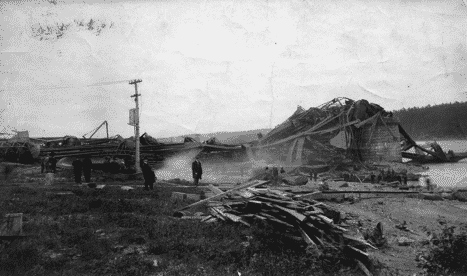
QUEBEC CITY BRIDGE (AUGUST 1907)
At the time of construction, the Quebec City Bridge was to be a wonder of engineering and the longest bridge in the world. Instead the bridge took the lives of 86 workers when the main cantilever collapsed, falling more than 150 feet into the St. Lawrence River.
FAILURE CAUSE
In a cost-cutting move, the bridge’s piers were placed farther out in the river, lengthening the main span from 490 meters to 550 meters.
The longer span required high stress that negatively impacted the lower chords on the arms of the cantilever, causing them to bend. This bending and collapse could have been prevented when the bridge’s southern half was taking shape in 1904.
During final design, the preliminary calculations which had been made during the planning stages were not property checked, as the actual weight of the bridge was far in excess of the carrying capacity.
When the bridge neared completion during the summer of 1907, the onsite engineering team noticed increasing distortions of key structural members already in place. The head of the team, Norman McLure, wrote to the bridge’s consulting engineer Theodore Cooper, who first replied that the problems were minor.
It took McLure until late August to convince Cooper that the issue was serious.
When Cooper finally telegraphed the bridge’s contractor, Phoenix Bridge Company, alerting them that no more load to the bridge be placed, it was too late. Late that same afternoon, the south arm and part of the bridge’s central section collapsed.
The bridge’s collapse was the direct result of errors in design and the miscalculation of loads.
The bridge was rebuilt and opened in August 1919.
Why are project lessons not learned?
Let's read from Veterans...
Rod Nathan: Commercial Manager, Crossrail, London, UK
Einstein is reported to have said: “Insanity is doing the same thing over and over and expecting different results.” People ignore lessons learned because their project is ‘different’, but many projects are similar.
There is often no corporate memory available to project teams, which start afresh each time. Reporting problems is good, but without successful solutions future projects cannot learn. Consider the progress made in site safety; what could we achieve if we approached cost control with the same zeal?
Piotr Rusinek: Operations Director, Arcadis, Warsaw, Poland
This happens for a number of reasons, such as people not wanting to own up to their own failures as they would rather communicate only their successes. Also, there is often no time for a proper debrief as the project team moves on to new projects or key staff leave the company
Shuibo Zhang: Professor of International Construction Contracts, Tianjin University, China
From an organisational perspective, summarising good and bad experience is not part of project performance evaluations. From an individual’s perspective, people tend to share success stories, not project failures.
William Francis: Property & Development Manager, Wesley Mission, Brisbane, Australia
Often, a project issues document is not used to record problems during the project’s life. Team members also often do not seek to learn lessons as they do not see this as part of their normal scope, or they believe that it is someone else’s responsibility . Establishing a good team rapport and a clear definition of the scope of lessons learned work before appointments can help alleviate this issue.
Thus, Learning from construction project failures and mistakes is an important way to improve future projects and avoid similar problems. Here are some steps that can be taken to learn from failures and mistakes in construction projects:
1. Identify the root cause: It is important to thoroughly investigate the cause of a failure or mistake in order to understand what went wrong and how to prevent similar issues from occurring in the future.
2. Document the failure or mistake: Creating a written record of the failure or mistake, including details about what happened, when it occurred, and any relevant information, can help to identify patterns and trends that may be indicative of larger issues.
3. Communicate the lessons learned: Sharing the lessons learned from a failure or mistake with the rest of the team and other stakeholders can help to ensure that those lessons are not forgotten and can be applied to future projects. Lesson learnts should be shared across the organisation and used as input for new projects, particularly at the planning stage. Industry-wide, professional institutions should collect and summarise project case studies and disseminate them as part of a body of knowledge.
4. Incorporate lessons learned into project planning: Incorporating the lessons learned from previous failures and mistakes into future project planning can help prevent similar issues. This may involve making changes to project processes, procedures, or protocols.
5. Follow up and monitor progress: Regularly monitoring and following up on actions taken to address failures and mistakes can help ensure that the lessons learned are effectively implemented and that future projects are successful.
To sum up ,failures and mistakes in construction projects can have serious consequences, including cost overruns, delays, and even accidents or injuries. Eventually, the reasons for a construction project’s failure are a lot and they have different levels of complexity. However, a big part of them can only be known by experience and as we continue working in the construction industry we will keep finding more and more types of failures but we will also have enough knowledge that enables us to solve and avoid the failures. Let's not be shy to talk about failures and mistakes early on; they are the backbone of your future success. They help inform you of rather, understand your failures and take appropriate action to mitigate them.
John Wooden said "Failure isn't fatal, but failure to change might be" . In the context of developing countries like Nepal , the initiation must be there to be updated as per the demand of time and situation and of course the nature/scope of the project.
“Good constructions come from good people, and all problems are solved by good design.” — Stephen Gardiner
References.
1.https://www.isurv.com/info/390/features_archive/10376/construction_projects_learning_from_mistakes.
2. https://esub.com/blog/why-do-projects-fail-how-to-avoid-project-failures.
3. https://pilebuck.com/construction-failures-worst-can-learn.
4. https://www.buildriteconstruction.com/9-reasons-construction-projects-fail.
-THANK YOU FOR YOUR PATIENCE-


Comments
Post a Comment